How to Trade Crypto on Polymarket: Beyond Up/Down Markets
A category guide to crypto trading on Polymarket: price-threshold and event markets, up-or-down mechanics, liquidity, fees, timing and the risk rules that separate trading from gambling.
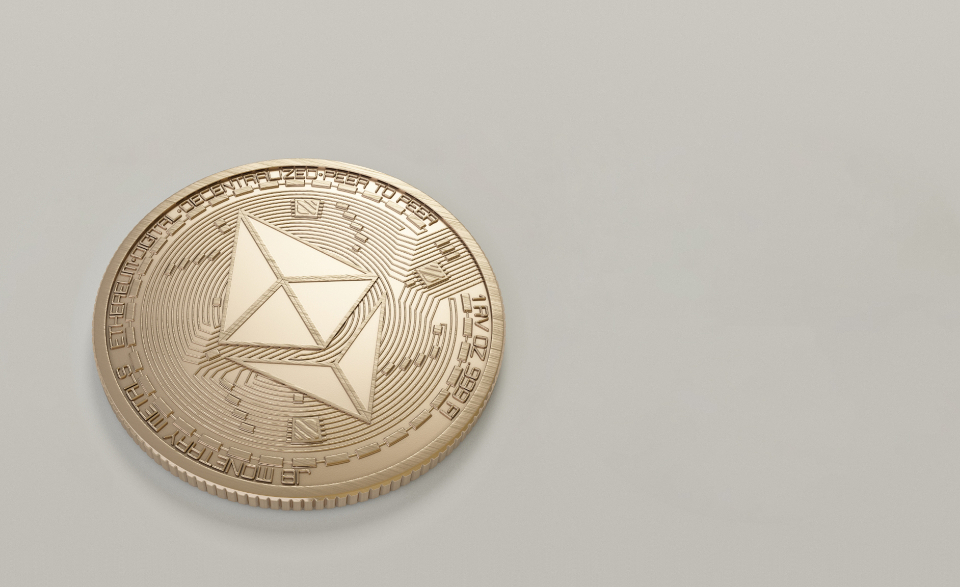
Crypto is not one market on Polymarket. It is several different games that happen to use the same asset. A five-minute up-or-down contract is a latency product. A "will Bitcoin be above $150,000 on December 31" market is a long-horizon forecast. A market about an ETF approval is an event-driven legal and political trade. Treating them as one category is the first mistake.
This guide separates the structures and gives a trading process for each.
The four crypto market types
- Short-window up/down. The price at one time versus another, often minutes or hours.
- Threshold markets. A price above or below a level on a date.
- Event markets. ETF approvals, regulation, exchange news, protocol upgrades.
- Adoption and ecosystem markets. Users, fees, launches, integrations.
The prices and order book documentation explains the execution layer shared by all four.
Short-window up/down markets
These are the most difficult. The outcome depends on a small price move over a short period. The edge is usually in speed, microstructure or a model that updates faster than the market.
Costs matter enormously:
- the spread;
- slippage;
- venue fees;
- the time between signal and fill.
The fee documentation gives the venue side. If the expected move is smaller than the round-trip cost, there is no trade. The up-or-down guide covers the mechanics.
Unless you have a tested execution path, treat these markets as a learning tool, not an income source.
Threshold markets
A threshold market asks whether an asset will be above or below a level at a future date. The edge comes from:
- a view on volatility;
- a view on drift;
- the shape of the distribution;
- the time remaining;
- the current spot price.
A simple framework: estimate the probability of the threshold using a volatility model, then compare it with the market price. The market price is not a pure probability; it includes risk premium, fees and liquidity.
Do not confuse "the market is at 30 cents" with "the probability is 30%". The difference is your opportunity or your cost.
Event markets
Event markets are researched like news, not like charts. Examples:
- will a spot ETF be approved by a date;
- will a major exchange list an asset;
- will a regulator bring an enforcement action;
- will a protocol upgrade ship.
Read the primary documents. A blog post is not a resolution source. The resolution documentation explains how outcomes are determined.
Liquidity and timing
Crypto markets can look liquid until volatility arrives. The book may thin exactly when you need to exit.
Check:
- depth near the touch;
- spread;
- whether the market is one-sided;
- the time to resolution;
- the next scheduled catalyst.
The realtime data documentation covers the data side. Execution still depends on the book.
Position sizing
Crypto positions should be sized for volatility:
- smaller per-market risk than a slow political market;
- a cap per theme, not just per market;
- a cash buffer;
- a hard drawdown limit;
- no leverage or borrowed money.
A 2% risk per trade can still produce a large drawdown if five crypto positions are correlated. Aggregate exposure matters more than the number of trades.
A crypto trading checklist
- Which market type is this?
- What is the exact resolution source?
- What is the time horizon?
- What is the round-trip cost?
- Is the expected edge larger than the cost?
- Is the book deep enough for entry and exit?
- Is the position correlated with other crypto bets?
- Is there a catalyst calendar?
- Is there a kill switch?
A note on stablecoins and settlement
Polymarket settles in USDC on Polygon. For a crypto trader, this adds a second layer of risk: the trading balance is a stablecoin position, and the bridge or wallet flow can fail independently of the market. Keep the operational side simple. Use a dedicated wallet, test withdrawals, and do not put the entire bankroll into a new bridge or contract without verifying the flow. The wallets and deposits guide covers the mechanics.
Common mistakes
- Trading short-window markets manually.
- Using spot price as the only input.
- Ignoring the spread because the move looks large.
- Treating a headline as a resolution source.
- Sizing all crypto markets the same.
- Adding to a losing position because "it always comes back".
- Copying a scalper without the same execution stack.
Bottom line
Crypto trading on Polymarket is a set of distinct strategies. Match the market type to your information and execution advantage. Short-window markets reward speed; threshold markets reward distribution thinking; event markets reward document reading. Pick one, measure costs and size for correlation.
Read copy trading Polymarket crypto if you plan to follow another wallet instead of trading the category yourself.
This article is research and education, not financial advice.
Sources
- 1.Prices and Orderbook— Polymarket Documentation
- 2.Fees— Polymarket Documentation
- 3.Realtime Data— Polymarket Documentation
- 4.Resolution— Polymarket Documentation