Polymarket Points and the POLY Airdrop: What Is Confirmed
Polymarket's CMO confirmed a POLY token and an airdrop, but there is no date, no allocation and no official claim page. Here is how to separate confirmed facts from farming hype.
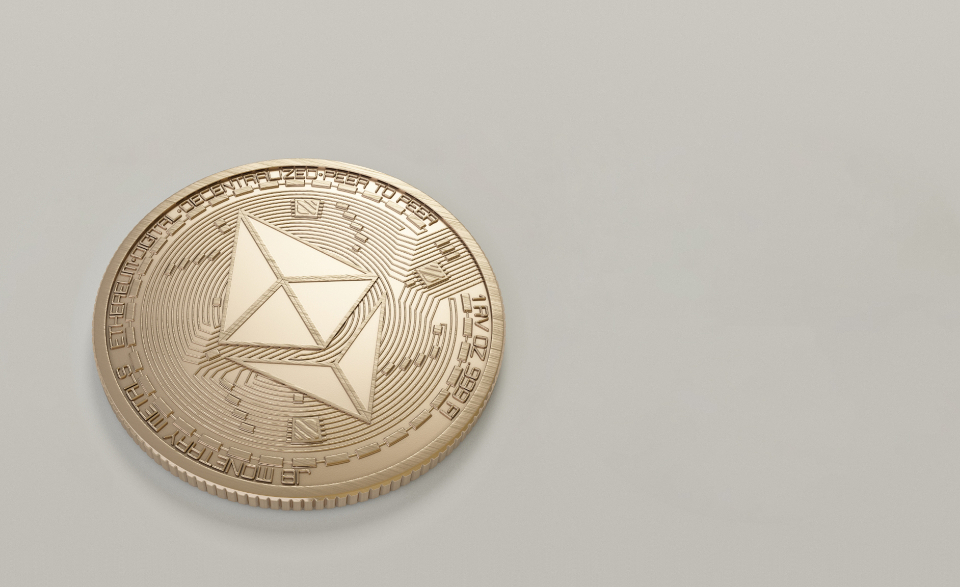
Polymarket has confirmed that it plans to launch a native token called POLY and an accompanying airdrop. It has not announced a date, an allocation, an eligibility formula or an official claim page. Those are the only facts a trader should rely on.
The confirmation came from then-chief marketing officer Matthew Modabber, who said on a podcast that the token would follow the US relaunch and that the company wanted it to have "true utility, longevity, and permanence," according to Blockworks. Modabber was fired in October 2026 after an internal investigation into marketing practices, which adds uncertainty to any statement he made.
What is confirmed
- Polymarket plans a token called POLY.
- The company has linked the timing to its US relaunch.
- An airdrop is planned.
- No date, supply, allocation or eligibility rules have been published.
What is not confirmed
- The percentage of supply reserved for users.
- Which actions count toward eligibility.
- Whether US users will qualify.
- Whether the token will trade on major exchanges.
- Whether there will be a points program, and how it works.
- The valuation or fully diluted market cap at launch.
Any article, video or Telegram channel that claims to know these details is speculating unless it cites an official Polymarket source.
The farming calculus
Airdrop farming is the practice of using a product in the hope of receiving free tokens. The expected value depends on four variables:
- The share of supply distributed to users.
- The fully diluted valuation at launch.
- The number of eligible users.
- The cost of farming, including fees, slippage and opportunity cost.
A simple model: if 10% of a $10 billion token is distributed to 100,000 users, the average allocation is $1,000. If 5% of a $20 billion token is distributed to 1 million users, the average is $1,000 as well. The averages can look attractive, but the distribution is usually skewed. Most users get less; a few get much more.
The cost side matters too. Farming volume with wash trades can lose money through spreads and fees. Farming liquidity can lose money through adverse selection. The liquidity rewards guide explains the inventory risk.
The sybil problem
Projects often try to exclude sybil accounts: multiple wallets controlled by one person. If you farm with many wallets, you may be disqualified or receive a smaller allocation. If you farm with one wallet, you may receive less than someone who spread activity across accounts.
There is no universal rule. The safest approach is to use one account, behave like a genuine user and keep records. The copy-trading bots article explains why automation can look like sybil behaviour.
The scam problem
Airdrops attract phishing. Common scams include:
- Fake claim websites that ask for your seed phrase.
- Fake social media accounts announcing an early claim.
- "Airdrop checker" tools that request wallet permissions.
- Tokens that can only be claimed by paying a "gas fee" to a random address.
The rule is simple: never share a seed phrase, never sign a transaction you do not understand, and only use links from Polymarket's official website or verified social accounts. If a claim page asks for your private key, it is a scam.
The regulatory problem
A token launch can trigger securities, tax and gambling rules. The US regulatory environment is especially uncertain. Polymarket's US venue is a CFTC-regulated exchange; adding a token could complicate its compliance story.
That is one reason the company may delay the launch or restrict it by jurisdiction. The US relaunch article explains the regulatory split.
How to value a speculative airdrop
A simple expected-value framework helps.
- Estimate the probability that the token launches in the next 12 months.
- Estimate the fully diluted valuation at launch.
- Estimate the share of supply distributed to users like you.
- Divide by the number of eligible users.
- Subtract the cost of farming.
For example, a 50% chance of a $10 billion token, a 10% user allocation and 200,000 eligible users gives an expected value of $2,500 per user before costs. That number is highly sensitive to each assumption. A 20% chance and 1 million users reduces it to $500.
The point is not the precise number. It is that the range is wide, and the cost of farming is real. The how much can you make guide provides a more grounded baseline.
Should you farm?
If you already use Polymarket for trading, farming is a secondary consideration. The best reason to use the platform is that you have an edge, not that you hope for a token.
If you are using the platform only for the airdrop, treat it as a speculative bet with an unknown payoff. Do not deposit money you cannot afford to lose. Do not wash trade. Do not pay for "guaranteed allocation" services.
The how much can you make guide explains the base rates for trading returns, which are a more reliable source of income than an unannounced token.
What to watch
Three official signals would change the picture:
- A Polymarket blog post or regulatory filing describing the token.
- A published allocation and eligibility page.
- A statement from the CEO or a current executive, not a former employee.
Until then, the honest answer is that POLY is planned, not launched. Everything else is speculation.
Sources
- 1.Polymarket CMO confirms POLY token and airdrop plans amid U.S. relaunch— Blockworks
- 2.Polymarket CMO Matthew Modabber confirms POLY token plans— Cryptopolitan
- 3.Polymarket— Wikipedia
- 4.Polymarket has reportedly fired its marketing chief, also a close friend of the CEO— CoinDesk
- 5.Liquidity Rewards— Polymarket Documentation