How Polymarket Sports Markets Work: Events, Resolution and In-Play Risk
A trader's guide to Polymarket sports contracts: moneyline, spreads and totals, companion events, kickoff order cancellation, in-play delays, fees and the risks that decide the trade.
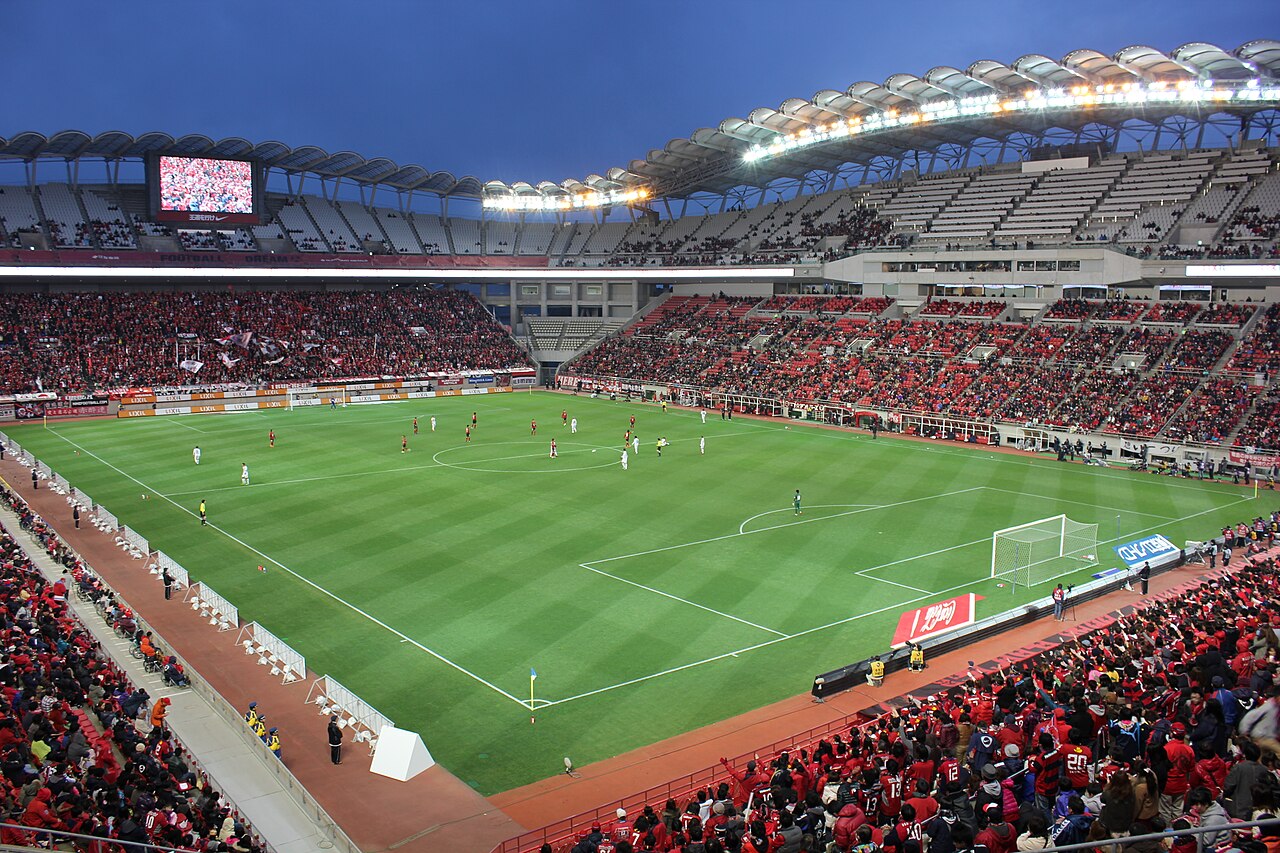
Polymarket sports markets are binary event contracts on a single game. A game is usually not one market but an event containing several: a moneyline market on who wins, a spread market on the winning margin, a totals market on the combined score, and often companion events for player props, halftime results, exact scores and additional lines. Each contract prices a yes-or-no question between $0.00 and $1.00 and resolves independently under its own written rules.
The mechanics that decide the trade are not the team names. They are the event structure, the automatic cancellation of resting orders at kickoff, the delay applied to in-play orders, the fee curve, and the resolution rule that determines whether overtime, a postponement or a void counts. A trader who reads the price but not the rule is guessing.
One game, several events
Polymarket's documentation describes a game's markets as split across a main event and companion events. The main event uses a slug such as mls-chi-vwh-2026-07-16. Companion events extend that slug with suffixes such as -halftime-result, -second-half-result, -exact-score, -first-to-score and -more-markets. They share a gameId, which is the reliable way to find all of them: fetch the main event, read its sports.gameId, then list events by that ID.
Every sports market also carries a market type. Polymarket lists moneyline, spreads and totals as the core types. More-markets events add types such as first-half totals, both teams to score and soccer team totals. The type is not cosmetic. A moneyline contract and a spread contract on the same game can both be right, and they can move in opposite directions on the same score.
That structure creates a trap for anyone who thinks of a game as one probability. A moneyline bet, a -1.5 spread and an over on total goals are three different claims about the same 90 minutes. They are correlated, but they are not interchangeable. A portfolio of all three is one view expressed several ways, not a diversified book.
Pre-game versus in-play
Before a game, orders rest on the book like any other limit order. Polymarket adds a sports-specific rule: outstanding limit orders are automatically cancelled once the game begins, clearing the order book at the official start time. The effect is to clear stale pre-game quotes rather than let them survive into a live game, but it creates an operational edge case. If a game starts earlier than scheduled, the documentation warns that orders may not be cleared in time. Monitor orders around kickoff rather than assuming the clock on the listing is the clock the venue uses.
In-play trading is a different market. Marketable orders in configured sports markets can enter a game delay: the order waits for the market's configured delay window before matching. During the delay the order is pending and cannot be cancelled. If the market, balance, allowance or risk checks fail when the delay expires, the order is rejected instead of matched. That matters if you are trying to trade a goal, a red card or a late injury. The price on the screen when you click is not a promise of the price you get.
Live data is separate from the order book. Polymarket runs a sports WebSocket at wss://sports-api.polymarket.com/ws for public live game status and scores. A trader watching a television broadcast is usually slower than the feed a professional in-play desk consumes. In a market where a single goal can move a price sharply, that difference is the trade.
How a sports market resolves
Sports markets use the same UMA optimistic-oracle process as other Polymarket prediction markets. Each market's rules name the resolution source, the end date and the edge cases. A proposal is bonded at typically $750 pUSD, followed by a two-hour challenge period. An undisputed market resolves in about two hours. A disputed one can take four to six days and, in rare cases, resolve 50/50.
The rule, not the headline, decides the bet. The rules for a team-sports market decide whether the result includes overtime or a shootout, what happens if a game is postponed, suspended or abandoned, and how a player prop is treated if the player does not start. Those choices are not uniform across leagues or market types. A moneyline contract that settles on the regulation-time result is a different asset from one that includes extra time, even when both are titled "Team A vs. Team B."
The resolution source matters for the same reason. A market that resolves on an official league result can behave differently from one that resolves on a broadcaster's box score if the two disagree about a scoring change. Read the rules before sizing the position. After the game is too late.
Liquidity, fees and limits
Sports is one of Polymarket's higher-fee categories. The taker fee is C × 0.05 × p × (1 − p), where C is the number of shares and p is the share price. At $0.50 the charge is $1.25 per 100 shares, the maximum in dollar terms. At $0.10 it is $0.45 per 100 shares. Makers pay nothing and receive a 15% share of the sports fee pool. The dollar charge peaks at 50%, but as a share of the amount traded it is highest at the cheap end: about 5% of a $1 notional at one cent, versus 2.5% of a $50 notional at 50 cents.
The tick size is not uniform. Polymarket's trading constraints allow increments from 10 cents down to 0.01 cents, and the 0.25-cent increment applies specifically to World Cup to-advance, moneyline, spreads and totals markets. Orders below the market's minimum size are rejected. These constraints matter more in sports than in a deep political market because the book can be thin, especially after kickoff.
In practice, sports liquidity tends to concentrate around the game. The Financial Times reported in October 2026 that the pseudonymous account swisstony had made about $12 million trading sports events. That is evidence of scale, not evidence of easy money. A high-volume sports operation depends on execution that a slower trader does not have, and its fills are not available to someone who sees the same price later. The public leaderboard shows the profit; it does not show the queue position, the cancelled orders or the losses that produced it.
The risks that decide the trade
Injury and lineup latency. A scratched starter or a late fitness report can reprice a market before a retail feed updates. In-play, the delay window means you cannot cancel a pending order if the news changes while it waits.
Rule ambiguity. Overtime, shootouts, shortened games, stat corrections and player-prop voids are resolved by the rules. A contract can be economically right and still lose on a technicality. The 50/50 resolution option is a real outcome, not a theoretical footnote.
Settlement delay. A disputed UMA proposal can lock capital for four to six days. An in-play strategy that depends on recycling capital has to price that lockup, not just the probability of the event.
Correlation. Companion markets on the same game share the same underlying. A book of moneyline, spread, totals and props is one match view, not four independent bets.
Limits and liquidity. Tick size, minimum order size, thin depth after kickoff and automatic cancellation at the start all shape what you can actually trade. A price that looks available in a screenshot may be gone by the time an order is signed.
Fee drag. The sports rate is 0.05, and the fee is charged on every taker fill. A strategy that trades in and out around live events can pay the fee several times on the same view. The edge has to survive that repetition.
A sports market is a forecast plus an operations problem. The forecast gets the attention. The operations decide whether the forecast is tradeable.
Sources
- 1.Markets & Events— Polymarket Documentation
- 2.Discover Markets: Sports— Polymarket Documentation
- 3.Resolution— Polymarket Documentation
- 4.Fees— Polymarket Documentation
- 5.Sports Channel— Polymarket Documentation
- 6.Polymarket's top trader is sports gambler 'Swiss Tony'— Financial Times