Prediction Market Manipulation: What Regulators Have Proven — and What They Haven't
A rare CFTC manipulation case in a prediction market ended in a $35,000 settlement with George Santos. Other cases show manipulation at the oracle, the volume and the data-source layers — but only some are proven.
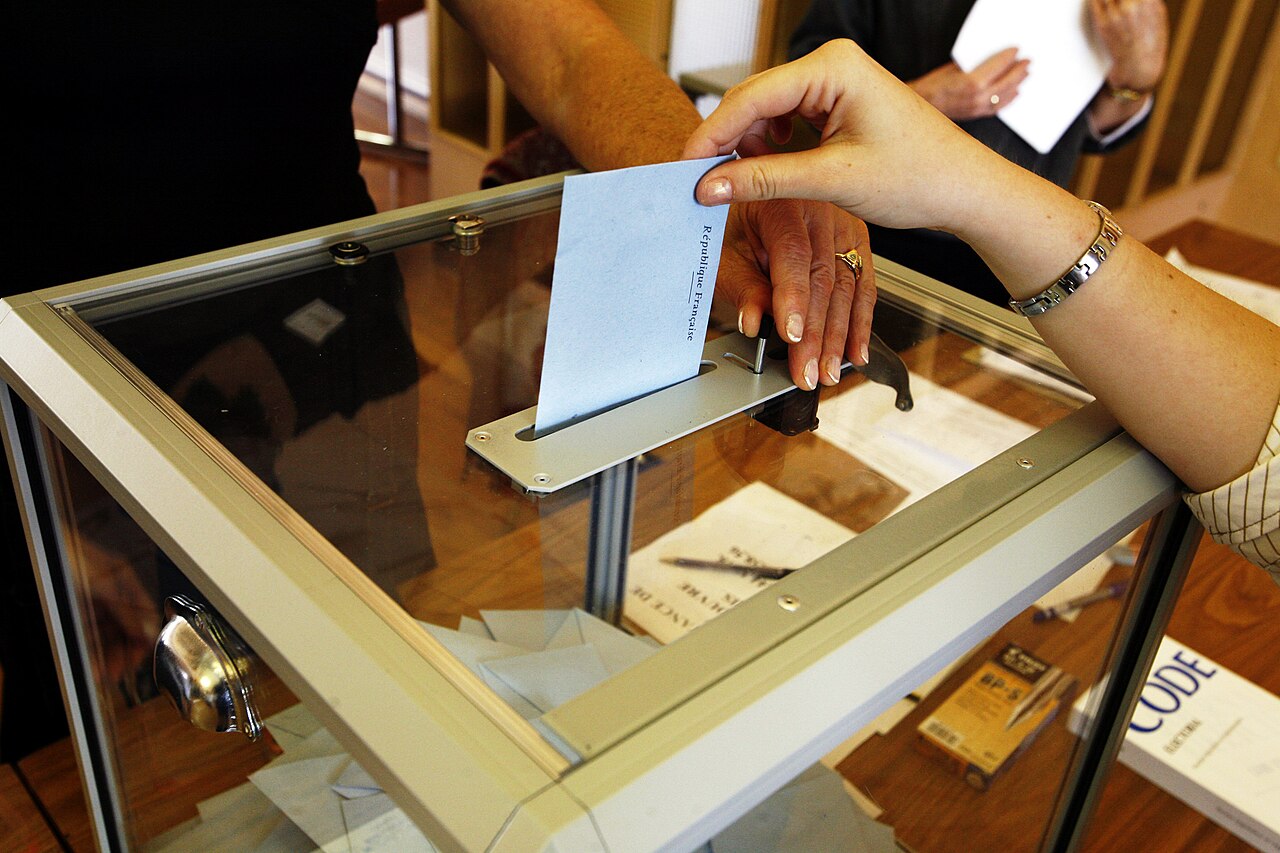
In July 2026, the CFTC brought a rare manipulation case involving a prediction market. The target was George Santos, the former congressman, and the contract was whether he would attend the 2026 State of the Union address. Santos settled, agreeing to disgorge $17,569.98 in profits, pay a $17,500 penalty and accept a three-year trading ban.
The case is important because it is proven. The CFTC entered an order, the facts are set out, and Santos accepted the remedy. Most other prediction-market manipulation stories are not in that category. Some are court findings, some are exchange sanctions, some are research estimates, and some are allegations under investigation. The distinctions matter.
Trading your own event: the Santos case
The CFTC found that between February 12 and February 25, 2026, Santos traded an event contract on whether he would attend the State of the Union, which was held on February 24. While building and unwinding positions, he posted on social media about whether he would go.
The order describes a pattern: Santos took a "yes" position, posted about attending, and the contract price moved in his favor. He then posted conflicting signals about his plans, the price moved again, and he built and exited a "no" position. The CFTC found that his posts contained material misrepresentations and omissions designed to move the contract price toward his positions.
The legal theory was manipulation, not insider trading. Santos was trading on his own information — his own travel plans. Because the information was his own, the case was charged as manipulation rather than misappropriation. But he could influence the underlying event and make misleading statements designed to move the contract price. The CFTC found that he did.
The case is a template for a particular kind of prediction-market abuse: the subject of a contract trading on their own conduct and using public statements to shape the market. It does not require classified information or a corporate duty. It requires influence and intent.
The compliance case that pushed Intrade out
The oldest enforcement example is not manipulation in the modern sense. It is a case about whether a prediction market was allowed to operate in the United States at all.
In November 2012, the CFTC sued Intrade and its parent, Trade Exchange Network, both Irish companies. The agency alleged that they had allowed US customers to trade binary options on CFTC-regulated commodities without being a designated contract market. The case also involved a 2005 cease-and-desist order that the companies had allegedly violated by lifting blocks on US customers.
In 2015, a federal judge granted summary judgment to the CFTC. In 2018, the court ordered the companies to pay a $3 million civil penalty, jointly and severally. The court found that they had permitted US customers to trade 5,503 binary option contracts from September 2007 through June 2012.
The Intrade case is often remembered as a cautionary tale about regulatory risk rather than market manipulation. That is the right lesson. A prediction market can be shut out of a jurisdiction for structural reasons long before anyone proves that a trader rigged a contract. Compliance is the first layer of market integrity.
The oracle fight: the $7 million Ukraine market
In March 2025, Polymarket ran a market on whether Ukraine would agree to a minerals deal with the United States before April. The "yes" probability jumped from about 9% to 100% on March 24 and 25, even though no official deal had been announced. The market resolved "yes."
CoinDesk reported that the result drew suspicions of manipulation by a large UMA token holder. Polymarket responded that the resolution was unexpected and that the market had been resolved too soon, but it denied that the episode was a "market failure" that warranted refunds. It defended the UMA voting process as the way to correct the outcome.
No regulator has found that a UMA holder manipulated the vote. The allegation is plausible in structure: a large token holder can influence a resolution, and if that holder also has a position in the market, the incentive is obvious. But "plausible" is not "proven." The case is best classified as an oracle-governance dispute with suspected manipulation, not an established enforcement finding.
That does not make it unimportant. If the resolution layer can be captured, then the integrity of the market depends on the integrity of a separate token governance system. That is a different risk from a trader rigging a price.
Manipulation beyond prices
Not every manipulation case involves a trader rigging a price. Two other patterns matter.
Wash trading: volume that is not real
In November 2025, Columbia University researchers published a study estimating that nearly 25% of Polymarket's historical trading volume involved wash trading — rapid buying and selling, often to oneself or colluding accounts, to inflate activity without changing net exposure. The study analyzed more than two years of on-chain data. It found that fake volume peaked at nearly 60% of weekly volume in December 2024 and remained an issue through October 2025. In some weeks, more than 90% of trades in election and sports markets looked inauthentic. One cluster of more than 43,000 wallets was responsible for nearly $1 million in volume, mostly at prices under a penny.
The study did not find that Polymarket orchestrated the activity. It argued that the platform's structure — no identity verification, no trading fees, pseudonymous wallets and speculation about a future token — made it vulnerable. Many of the suspected wallets made no real profits, suggesting the goal was to game incentives or rankings rather than to profit from a price move.
Wash trading is illegal in traditional financial markets. On crypto prediction markets, it is a documented pattern but not, in this study, an enforcement finding. The distinction matters: inflated volume can mislead traders about liquidity and participation without necessarily changing the probability of the underlying event.
The weather sensor case
In April 2026, temperatures recorded at Paris Charles de Gaulle airport spiked on two evenings, April 6 and April 15. Polymarket ran daily markets on the peak temperature in Paris. The chance of the temperature exceeding 18°C on those days had been estimated at about 1%. Traders who bet on the unlikely outcome won about $34,000 in total; one trader won about $21,000 on April 15, according to The Independent.
Météo-France filed a criminal complaint with the air transport gendarmerie, citing physical findings on one of its instruments and anomalies in the sensor data. The complaint concerned alteration of the operation of an automated data processing system. French authorities opened an investigation.
The "hair dryer" detail came from speculation in crypto outlets and weather forums. It is unverified. What is documented is the complaint, the investigation and the abnormal readings. No court finding has been announced against anyone for tampering with the sensor.
The case illustrates a third manipulation layer: the data source. If a market settles on a physical sensor, then the sensor is part of the attack surface. That is true for weather, but also for sports timing systems, airport data, official feeds and any other automated source.
What the cases have in common
Manipulation can happen at several layers: the event, the oracle, the volume and the data source. Santos traded on and influenced the event. The Ukraine dispute concerned the oracle. The Columbia study concerned volume. The weather case, if proven, would be a physical data-source attack.
The common conditions are thin markets, concentrated payoffs and a settlement rule that turns on a discrete act. The CFTC's September 2026 advisory on mention markets made the point explicitly: contracts that settle on whether a person says a word, attends an event or interacts with someone else present a heightened risk of manipulation because the settlement turns on conduct that may not be independently verifiable.
For traders, the practical lessons are uncomfortable. A strange resolution is not proof of fraud. A large volume number is not proof of liquidity. A well-timed trade is not proof of insider knowledge. But each is a reason to check the rules, the order book and the resolution source before sizing a position.
The enforcement record is still short. Santos is proven. Intrade is proven. The rest is a mix of allegations, studies and open investigations. That is the honest state of the evidence — and it is more useful than a clean narrative that treats every suspicious market as a rigged one.
Sources
- 1.CFTC Orders George Santos to Pay $35,000 for Manipulative Trading of State-of-the-Union Event Contract— Commodity Futures Trading Commission
- 2.Federal Court Orders 'Prediction Market' Companies to Pay $3 Million Civil Monetary Penalty— Commodity Futures Trading Commission
- 3.Polymarket, UMA Communities Lock Horns After $7M Ukraine Bet Resolves— CoinDesk
- 4.Polymarket's Trading Volume May Be 25% Fake, Columbia Study Finds— CoinDesk
- 5.Police investigate after claims 'hair dryer used to manipulate weather sensor to win $34k bet'— The Independent
- 6.CFTC Releases Staff Advisory on Mention Markets— Commodity Futures Trading Commission